
Shockwave Therapy for Posterior Tibial Tendonitis in Commerce Township, MI
That nagging pain along the inside of your ankle didn’t show up because you did something reckless.
For most active adults, posterior tibial tendonitis develops quietly, through miles of running, long days on your feet, or simply the cumulative load of a lifestyle you love. The pain doesn’t mean you did anything wrong, but it’s real and has a way of grounding you when you’d rather be moving.
At Lakes Foot & Ankle Associates, we specialize in getting our active patients back to the activities that matter most to them. Our non-surgical treatment approach for posterior tibial tendon dysfunction pairs a precise clinical diagnosis with one of the most effective tendon healing therapies available: radial shockwave therapy. If your inner ankle pain has been holding you back from running, hiking, or simply getting through a full day, we’re here to help you move forward.

What Is Posterior Tibial Tendonitis?
The posterior tibial tendon runs along the inside of your ankle and plays a central role in supporting your arch and stabilizing your foot with every step. When this tendon becomes inflamed or degrades from overuse — a condition known as posterior tibial tendon dysfunction (PTTD) — the result is pain, swelling, and a noticeable loss of the mobility you depend on.
Posterior tibial tendonitis is especially common among runners, hikers, and anyone who spends extended time on their feet. Left unaddressed, it can progress and contribute to changes in foot structure, including adult-acquired flat feet. Catching and treating it early makes a significant difference in how quickly you recover and how completely you return to your routine.
Common signs of posterior tibial tendon dysfunction include:
- Pain and tenderness along the inner ankle and arch
- Swelling on the inside of the foot or ankle
- Increased discomfort during or after physical activity
- Difficulty with single-leg heel raises
- A gradual flattening of the foot arch over time
Why Radial Shockwave Therapy for Posterior Tibial Tendonitis?
Rest and supportive footwear can manage discomfort, but they don’t resolve the underlying tendon damage. Radial shockwave therapy does. By delivering targeted acoustic pressure waves directly into the affected tissue, it stimulates the body’s own repair process; increasing circulation, promoting collagen production, and restarting healing that has stalled.
What to Expect During Treatment
- Sessions are performed right here in our Commerce Township office
- Each session typically takes 15 to 20 minutes
- No anesthesia, no incisions, and no downtime required
- Most patients complete 3 to 5 sessions spaced one to two weeks apart
- Mild soreness after treatment is normal and typically resolves within a day or two
Most patients begin noticing meaningful improvement within the first few sessions, with the goal being restored function, improved range of motion, and a confident return to the activities they came to us for.
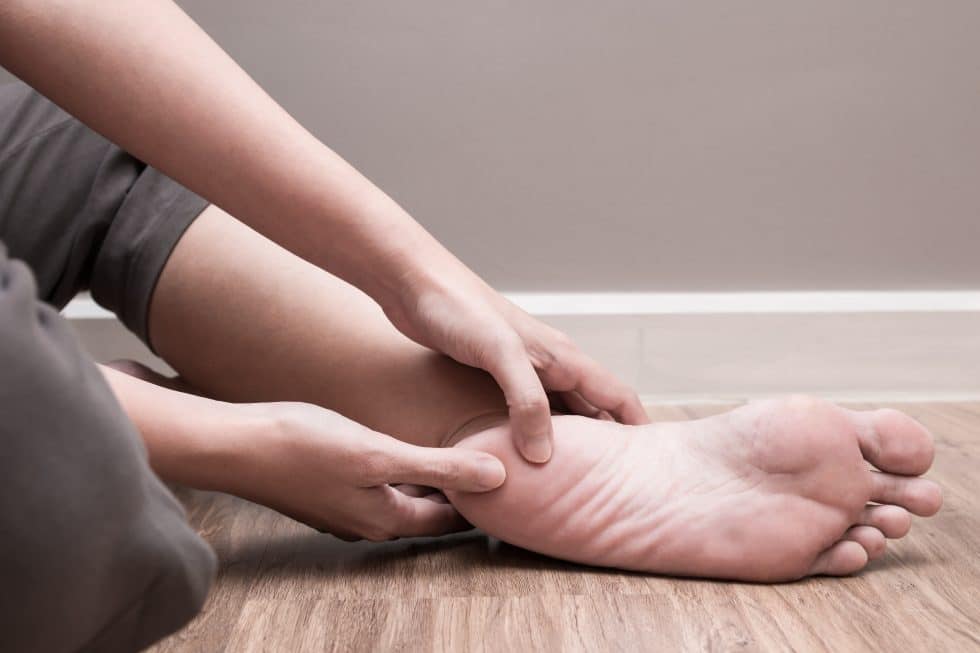
Our In-Office Approach to Posterior Tibial Tendonitis Treatment
Our team of board-certified podiatrists doesn’t just hand you a printout and send you on your way. Every treatment plan starts with a thorough in-office evaluation, including a biomechanical assessment and on-site imaging when needed, so we’re treating the right thing from the start.
Beyond shockwave therapy, your care plan may include:
- In-Office Range-of-Motion & Stretching Guidance: Guided, progressive mobility work performed and monitored in our office, not a sheet of exercises to figure out on your own.
- Ultrasound-Guided Assessment: Real-time imaging to evaluate tendon health and track progress throughout treatment.
- Activity Modification Planning: A realistic return-to-activity timeline so you’re never left guessing how much is too much.
- Footwear & Load Management Guidance: Small adjustments to your training or movement can make a significant difference in how quickly you recover.
Everything stays under one roof, with the same team, from your first visit to your return to full activity.
Posterior tibial tendonitis involves structural changes in the tendon tissue itself, not just surface-level inflammation. Many standard approaches address the symptoms without targeting the underlying degeneration.
Radial shockwave therapy works differently; it uses acoustic energy to stimulate cellular repair and collagen production within the tendon, addressing the root cause rather than masking the pain. For patients who haven’t responded to more conservative measures, it’s one of the most effective non-surgical options available.
Lakes Foot & Ankle Associates offers radial shockwave therapy at our Commerce Township office, serving patients from Clarkston, Milford, Waterford, West Bloomfield, Keego Harbor, and communities across Oakland County. If you’ve been searching for posterior tibial tendonitis shockwave therapy near you in Michigan, our team is here and ready to help.
An ankle sprain involves ligament damage, typically from a sudden twist or roll of the ankle. Posterior tibial tendon dysfunction develops gradually through overuse and affects the tendon on the inside of the ankle responsible for supporting your arch.
The pain tends to build over time and worsen with activity, rather than appearing suddenly. Because the two conditions can feel similar, a proper diagnosis from one of our podiatrists is the best way to confirm what you’re dealing with and get started on the right treatment.
Posterior tibial tendon dysfunction is one of the most common causes of adult-acquired flat foot, and the connection between tendon health and arch support is well established.
Shockwave therapy for flat feet and inner ankle pain related to PTTD can be highly effective, particularly when treatment begins before significant structural changes have occurred. The sooner we can evaluate your tendon health, the more options we have to protect your arch and restore your function.
Most patients with posterior tibial tendonitis see significant improvement over 3 to 5 sessions, spaced one to two weeks apart. The exact number depends on the severity and duration of your condition, as well as how your body responds to treatment.
During your initial evaluation, our doctors will give you a clear picture of your treatment timeline and what returning to your activity goals should feel like along the way.
Get Back to the Lifestyle You Deserve
Posterior tibial tendon pain doesn’t have to be the reason you sideline a run, skip a hike, or modify everything you enjoy. With the right diagnosis and the right treatment plan, recovery is not only possible; it’s something we help patients achieve every day right here in Commerce Township.
Lakes Foot & Ankle Associates is proud to provide advanced, non-surgical treatment for posterior tibial tendon dysfunction to active adults and athletes throughout Michigan. Our team brings the expertise, the technology, and the genuine commitment to get you moving again.
Call us at (248) 360-3888 or request an appointment online to take the first step back toward the activities you love.