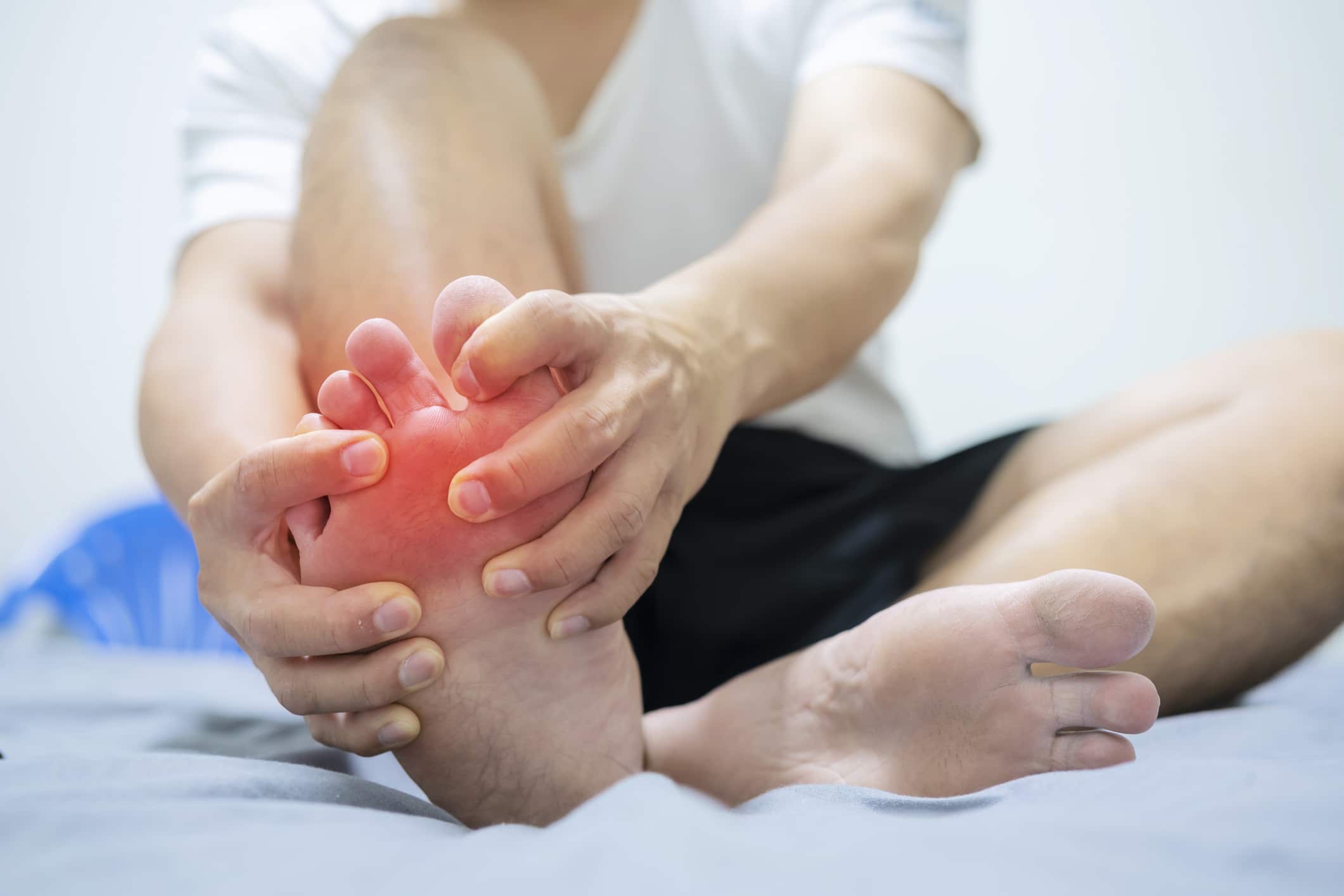
Metatarsalgia pain treatment works best when you know what you’re actually treating. Metatarsalgia isn’t a diagnosis. It’s a location. It describes pain and inflammation under the ball of the foot, but it doesn’t tell you why it’s happening.
Most people describe it as walking on pebbles or marbles, especially barefoot on hard floors. Getting lasting relief means finding what’s driving the pressure in the first place.
Metatarsalgia At a Glance:
- Metatarsalgia describes where your foot hurts, not what’s causing it. The right treatment depends entirely on the cause.
- Overuse, poor footwear, high arches, flat feet, and age-related fat pad loss are the most common drivers.
- Shoes with a rocker sole and a wide toe box take meaningful pressure off the metatarsal heads with every step.
- Metatarsal pads help, but placement matters. The pad goes just behind the metatarsal heads, not directly under them.
- Most cases resolve within six to eight weeks with the right footwear and offloading.
What Causes Metatarsalgia?
The metatarsal heads, the rounded ends of the long bones you feel when you press on the ball of your foot, carry a significant share of your body weight with every step. When too much pressure concentrates at one or more of those heads repeatedly, pain and inflammation follow.
Several things can drive that imbalance:
- Overuse and activity changes. Ramping up mileage quickly or switching to harder surfaces can overload the metatarsal heads before the foot adapts. This is especially common across Commerce Township and Oakland County in spring, when people go from months of low activity to outdoor walks, runs, and sports almost overnight.
- Footwear. High heels shift weight forward onto the metatarsal heads. Thin-soled shoes offer no cushioning. Narrow shoes compress the metatarsal heads together and increase pressure between them.
- Foot structure. High arches transfer more load to the metatarsal heads. Flat feet can cause the second metatarsal to carry a disproportionate load. Bunions and hammertoes push more pressure into the second or third metatarsal head.
- Fat pad atrophy. The ball of the foot has a natural cushion of fatty tissue that thins with age, particularly after 40. Once it’s gone, you’re walking on the metatarsal heads with far less protection.
Is metatarsalgia the same as intermetatarsal neuritis (Morton’s neuroma)?
No. Metatarsalgia is a broad aching or burning pressure under the metatarsal heads. Intermetatarsal neuritis, sometimes called Morton’s neuroma, is a specific nerve irritation between the metatarsal heads. It most often develops between the third and fourth toes and causes burning or electric pain that radiates into the toes.
A quick self-test: squeeze your forefoot gently from both sides. Burning or electric pain specifically between two toes points toward intermetatarsal neuritis. A broader ache across the ball of the foot points toward metatarsalgia. A podiatrist can confirm what you’re dealing with.
Shoes and Insoles: Finding Relief for Metatarsalgia
The single most important shoe feature for metatarsalgia is a rocker sole. It’s curved at the forefoot so the shoe rolls forward without requiring the metatarsal heads to bend at push-off, which is when forefoot pressure peaks. A wide toe box lets the forefoot spread naturally and reduces compression between the heads. Look for a firm midsole with forefoot cushioning rather than a soft sole that collapses under load.
Do insoles actually help metatarsalgia?
Yes, but placement is everything. A metatarsal pad lifts and spreads the metatarsal heads, redistributing pressure away from the painful area. It needs to sit just behind the metatarsal heads, not under them. Placed correctly, it offloads effectively.
Placing it under the head increases pressure on exactly the spot that’s already overloaded. If you’re not getting relief from an over-the-counter pad, check the placement before assuming it isn’t working. We can mark the correct position on your insole at your appointment.
Custom orthotics go further by addressing the underlying foot mechanics driving the imbalance. For patients with flat feet, high arches, or abnormal gait, a custom device makes a more meaningful difference than anything off the shelf.
Other Treatment Options for Metatarsalgia
Rest and activity modification give inflamed tissue time to settle. Low-impact activity like swimming and cycling keeps you moving without loading the forefoot the way running or court sports do.
Ice for 15 to 20 minutes after activity helps. Over-the-counter anti-inflammatories manage pain but work best alongside footwear changes.
For persistent cases, corticosteroid injections reduce inflammation around a specific metatarsal head. MLS laser therapy, which we offer at Lakes Foot & Ankle Associates, reduces inflammation and accelerates tissue healing without the risks of repeated steroid injections.
Surgery is rarely necessary and typically reserved for structural deformities, plantar plate tears, or a metatarsal that’s anatomically too long.
When It’s Time to See a Podiatrist
Most mild cases respond within two to three weeks. Moderate cases typically improve within six to eight weeks. Persistent or worsening forefoot pain warrants professional evaluation to rule out conditions that self-treatment won’t address.
Get evaluated if any of the following apply:
- Pain hasn’t improved after four to six weeks of appropriate footwear and pad use
- You feel point tenderness along the shaft of a metatarsal bone, which can indicate a stress fracture
- Pain comes with burning, tingling, or numbness between the toes
- A toe is drifting or separating, which can signal a plantar plate tear
- Swelling, warmth, or redness appear around a joint without obvious injury
These symptoms point to conditions that need an accurate diagnosis rather than continued self-treatment. Our podiatrists in Commerce Township are here to assist you.
Frequently Asked Questions About Metatarsalgia
How long does metatarsalgia take to heal?
Mild cases often improve in two to three weeks. Moderate cases take six to eight weeks with consistent conservative care. Cases driven by underlying foot structure issues may take longer and often benefit from custom orthotics. Continuing high-impact activity without modification significantly extends recovery.
What are the best shoes for metatarsalgia?
Look for a rocker sole that reduces push-off pressure, a wide toe box that lets the forefoot spread, and forefoot cushioning without a sole so soft it collapses. Brands like New Balance and Brooks consistently produce styles that meet these criteria. Avoiding high heels, thin-soled flats, and narrow shoes during recovery matters just as much.
When should I see a podiatrist for ball of foot pain?
If pain hasn’t improved after one to two weeks, is getting worse, or comes with numbness, tingling, or changes in toe alignment, it’s time to come in. Ball of foot pain has several possible causes, including stress fractures, plantar plate tears, and Morton’s neuroma, that need specific treatment.
You Don’t Have to Live With Foot Pain
Metatarsalgia is common and very treatable when you understand what’s driving it. The right shoes, correctly placed metatarsal pads, and activity modification resolve most cases. The key is not letting it become a chronic pattern by pushing through it for months before getting it looked at.
Talk to a Podiatrist in Commerce Township, MI
At Lakes Foot & Ankle Associates, we evaluate ball of foot pain with a thorough exam and pressure assessment to identify exactly what’s driving your symptoms and build a treatment plan around the actual cause, not just the location.
Call (248) 360-3888 or request an appointment online. Happy feet for the life you deserve.